
Blog
How Many Shoe Boxes Fit on a Pallet? A Practical Guide to Palletizing Footwear

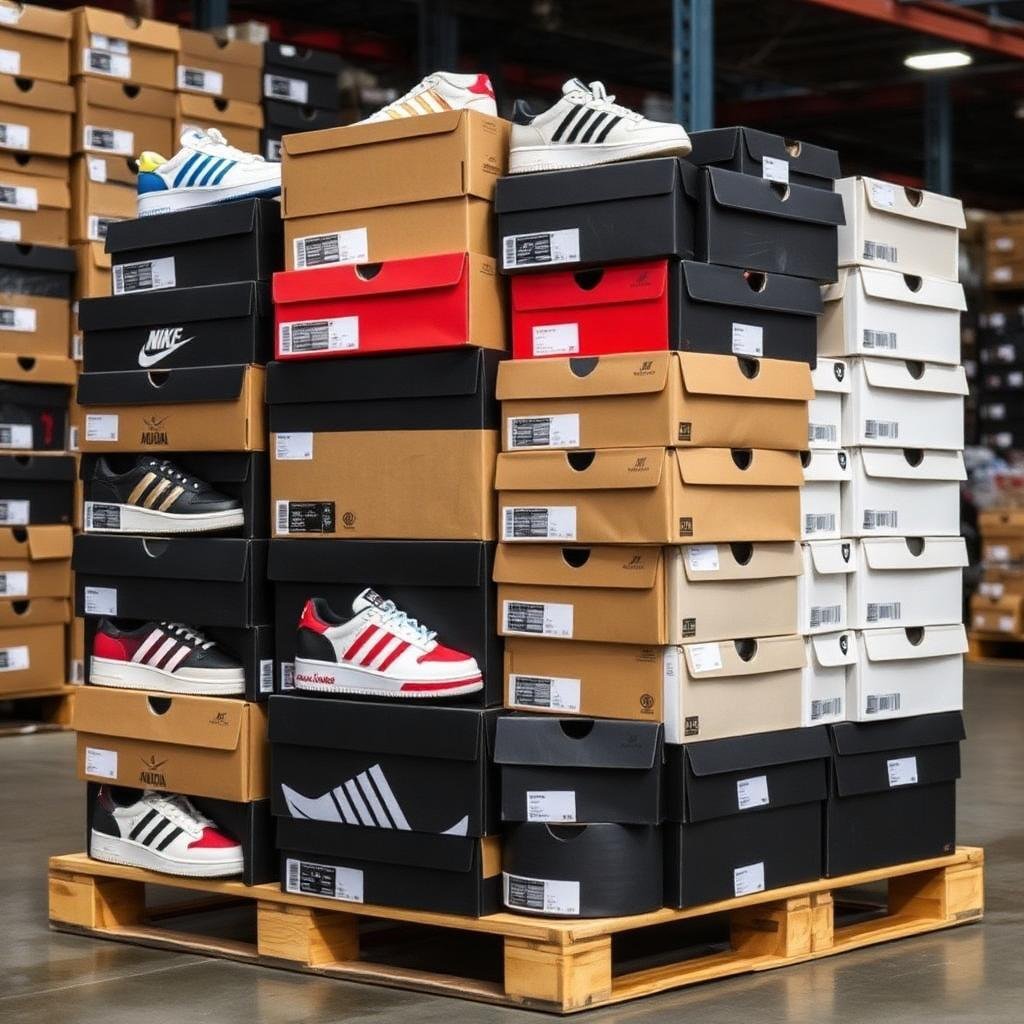
When you’re shipping footwear in bulk, one question can make a major difference to your shipping costs, warehouse space, and logistics planning: how many shoe boxes fit on a pallet?
There isn’t one universal answer because shoe boxes come in different sizes, while pallets vary by region and application. However, understanding pallet dimensions, box measurements, stacking height, and loading patterns can help you estimate your shoe boxes per pallet and plan shipments more efficiently.
Understanding Standard Pallet Dimensions
For North American freight, one of the most common pallet sizes is the 48 × 40-inch GMA pallet (approximately 1219 × 1016 mm).
The pallet footprint is only the starting point. To calculate how many shoe cartons you can load, you also need to consider the shoe box’s length, width, and height, along with the maximum permitted load height and weight.
Different regions may use different pallet sizes, including Euro pallets measuring approximately 1200 × 800 mm.
How Many Shoe Boxes Fit on a Pallet?
For example, imagine a shoe carton measuring approximately 13 × 8 × 5 inches. Depending on its orientation and the pallet-loading pattern, several cartons could fit across each layer.
The basic calculation is:
Boxes per pallet = boxes per layer × number of layers
The number of boxes per layer is known as the Ti, while the number of layers is the Hi. This Ti-Hi configuration is widely used when planning pallet loads.
Because shoe boxes are relatively compact, a pallet can potentially hold dozens or even well over 100 boxes, depending on dimensions and permitted stacking height. There is no reliable single number without knowing the exact carton measurements.
Why Shoe Box Dimensions Matter
A small difference in shoe box dimensions can significantly change your pallet capacity.
For instance, boxes that fit tightly across a 48 × 40-inch pallet can maximize the available footprint. Rotating cartons may sometimes improve the arrangement, while an interlocked stacking pattern can improve stability.
However, maximizing the number of cartons isn’t always the best strategy. A load must remain stable, within the pallet’s weight rating, and suitable for handling and transportation.
Stack Height and Weight Limits
The number of shoe boxes you can stack also depends on the allowable load height. Freight planning guides commonly use a cargo height around 60 inches above the pallet for certain standard configurations, but the permitted height varies by carrier, warehouse, trailer, and shipping requirements.
Weight matters just as much. A shoe pallet packed with lightweight footwear may reach its height limit before its weight limit, while heavier footwear or packaging materials can create the opposite situation.
How to Optimize Shoe Box Pallet Loading
For efficient shoe box palletizing, consider these best practices:
- Measure the exact external dimensions of each carton.
- Test different box orientations before finalizing the loading pattern.
- Calculate cartons per layer and total layers.
- Keep the load square and stable.
- Avoid unsafe overhang unless specifically permitted.
- Consider stretch wrapping or other appropriate load-stabilization methods.
- Confirm carrier and warehouse height and weight requirements.
Efficient pallet configuration can reduce wasted space and make shoe shipping and warehouse storage more predictable.
Final Thoughts
So, how many shoe boxes fit on a pallet? The answer depends primarily on the pallet footprint, shoe box dimensions, stacking height, loading pattern, and weight restrictions.
For an accurate calculation, measure your shoe cartons and pallet first, then determine the optimal Ti-Hi pallet pattern. Getting this right can help you improve warehouse efficiency, estimate freight requirements, and make bulk footwear shipping more cost-effective.
Whether you’re a footwear manufacturer, wholesaler, retailer, or e-commerce business, smart pallet loading and shipping optimization can turn limited warehouse and transportation space into a valuable logistics advantage.


